Καλημέρα! (Good morning!)
Today we headed to Thebes and Arachova. This was somewhat of a drive from Athens, but we were able to get some much needed rest after the day before. First, we headed to Thebes to a museum with lots of cool artifacts. One of the few things that has interested me so far was the beautiful art the greeks had drawn. Pottery lined the walls, and each pottery bowl or cup was ornamented differently. A major theme in greek art was the idealization of humans. You can see from the many different vases, that there are clearly strong, youthful depictions of human men and women. Topics reflected the importance of strength, athletic competition and battles. The greeks were also known for their independence and valued courage and valor. Human figures in sculptures became more naturalistic in their portrayal relating to proportion and balance. Like we had seen in the Acropolis museum yesterday, the famous contra-posts technique became very important and added a new element of dynamism to the figure portrayed.
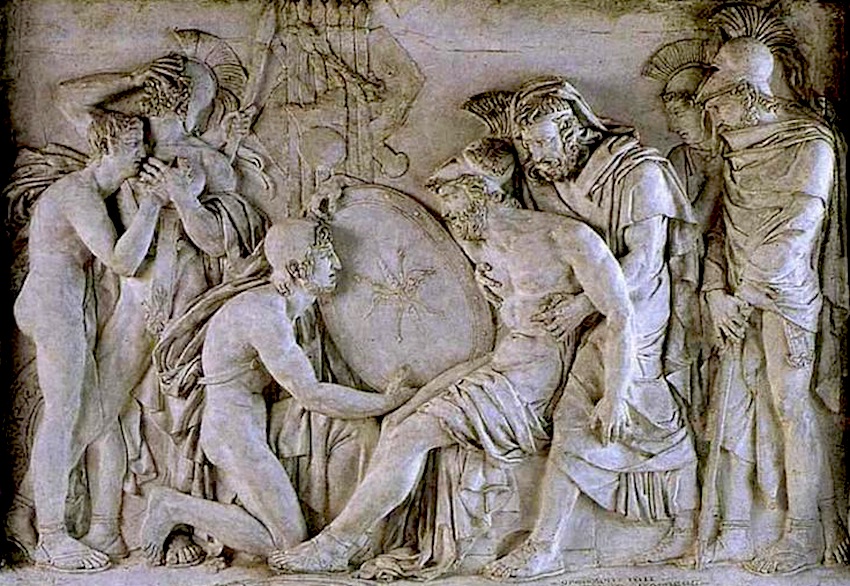
While walking around the museum there were many fragmented marble, maybe limestone, pieces that had been painted that were positioned in front of murals based on those painted pieces. See the picture below to understand, it's very hard to describe. I wondered how this was possible with so few pieces to grasp an idea, because I know that I would not be able to do this personally. So, I googled it! Really it takes a lot of knowledge about this time period and understanding of the art to be able to do this.
One thing that I have become interested in is the history of the sites we have visited. Thebes was special however, in that there wasn't a specific site, just a museum, but the history of the city of Thebes is full of tragedy (like most greek history). The theban myth states that there was King Laius and his wife of Thebes who were both warned by a prophet that if they ever had a child, the child would bring ruin upon the house of Laius. Of course, King Laius didn't listen to the prophecy and conceived a child with his wife. However, the king was still scared about the prophecy and had the boys ankles pierced and joined together with a strap. To get even more gruesome, King Laius then either threw the child into the sea or gave him to a servant in the mountains. The child was then rescued by a king who has no children of his own.
Eventually, the child grew up and left his adoptive parents home. and met his biological parents who long story short the child ends up killing King Laius. This leads me to conclude that the theme of hierarchies played an important role in ancient greek culture. If you think about it, there are specific Gods for specific elements in the world, God of the Sea, God of Love, God of beauty, etc. It is clear to see that that there is a clear theme of hierarchies in Ancient Greece. This is something that has continued throughout the modern world and can really be seen in Europe in countries like England and Wales.
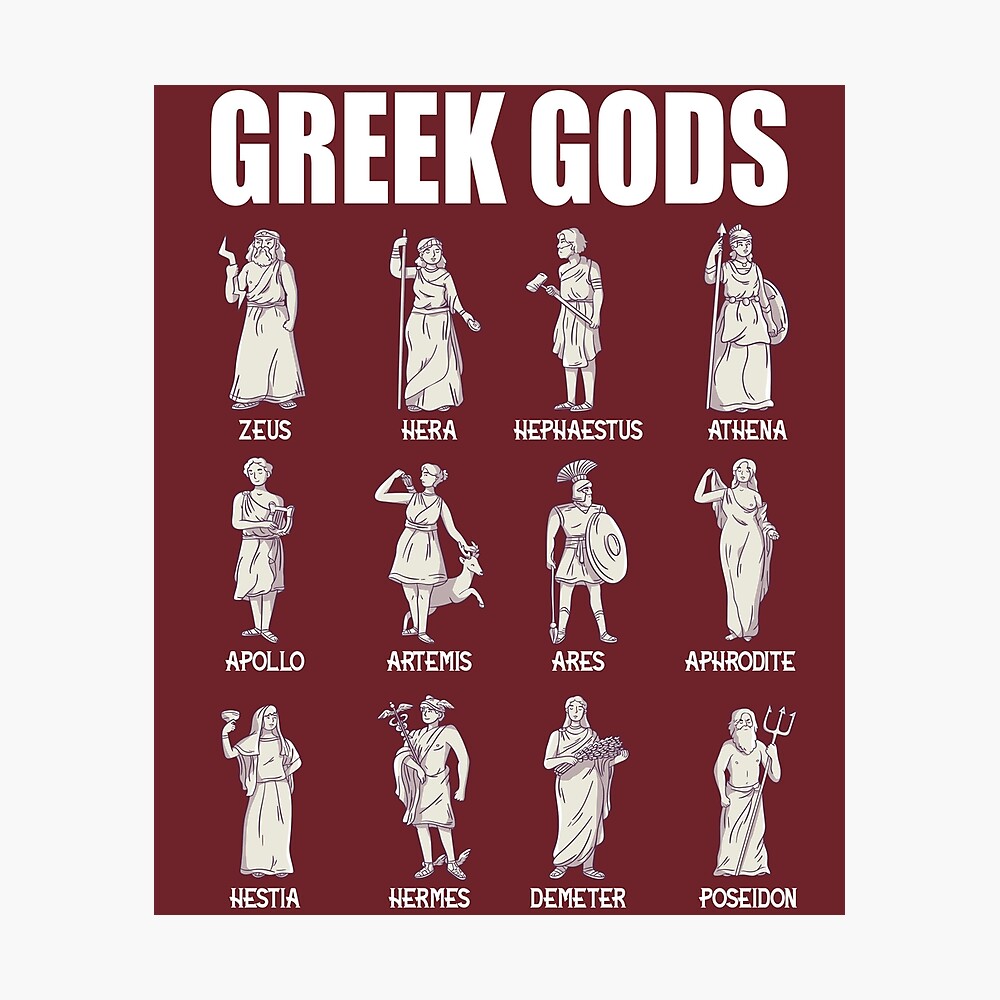
I have loved every minute of exploring and learning about major topics in Ancient Greece. It's fun to compare Ancient Greece to the modern world. Thinking about it you can see how we have been influenced by Ancient Greece despite realizing it. I'm sure there are many more connections that I will make but, I think for now it will be worthwhile to just understand that hierarchy wasn't just about kings and queens in Ancient Greece but more about the religious hierarchy with the Gods and Goddesses. With that being said, I think this is all that I can reflect on for today, come back for more tomorrow, or the day after, depends on how busy we are.

Comments
Post a Comment